Back to Blog
ReactArchitecture
Architecting Scalable Microfrontends with Module Federation
Learn how to split large monolithic React applications into independently deployable microfrontends using Webpack Module Federation.
February 15, 2024
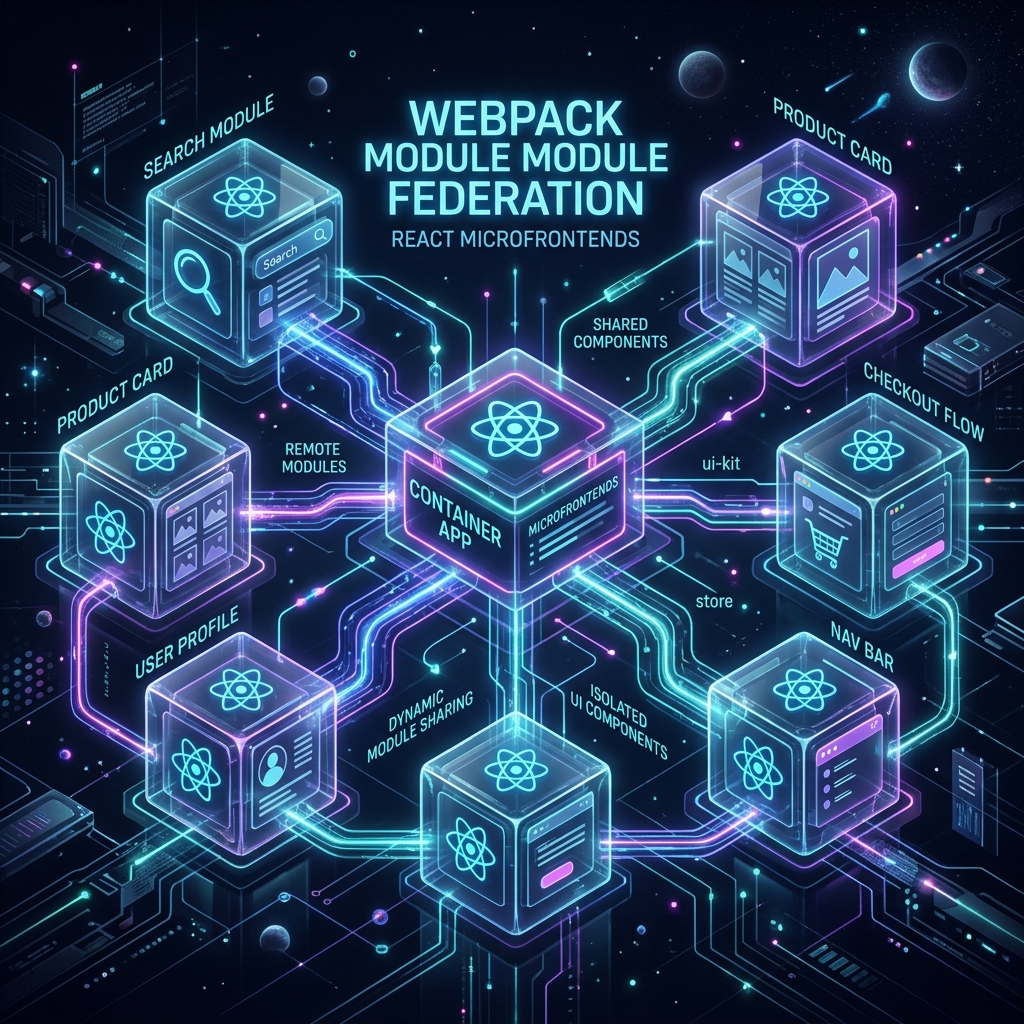
Microfrontend architecture has revolutionised how we build large-scale applications. By splitting monolithic React applications into independently deployable units, teams can work autonomously and scale effectively.
The Problem with Monoliths
As frontend codebases grow, they inevitably become harder to maintain. Build times skyrocket, deployment pipelines become fragile, and testing takes hours.
Enter Module Federation
Webpack 5 introduced Module Federation, a feature that allows JavaScript applications to dynamically load code from another application at runtime.
// webpack.config.js
plugins: [
  new ModuleFederationPlugin({
    name: 'host_app',
    remotes: {
      remote_app: 'remote_app@http://localhost:3001/remoteEntry.js',
    },
  }),
]
Key Benefits
- Independent Deployments: Teams can deploy without coordinating with the host application.
- Shared Dependencies: Module federation intelligently shares vendor libraries so users don't download them twice.
- Technology Agnostic: You can mix Vue, Angular, and React in the same DOM tree.